
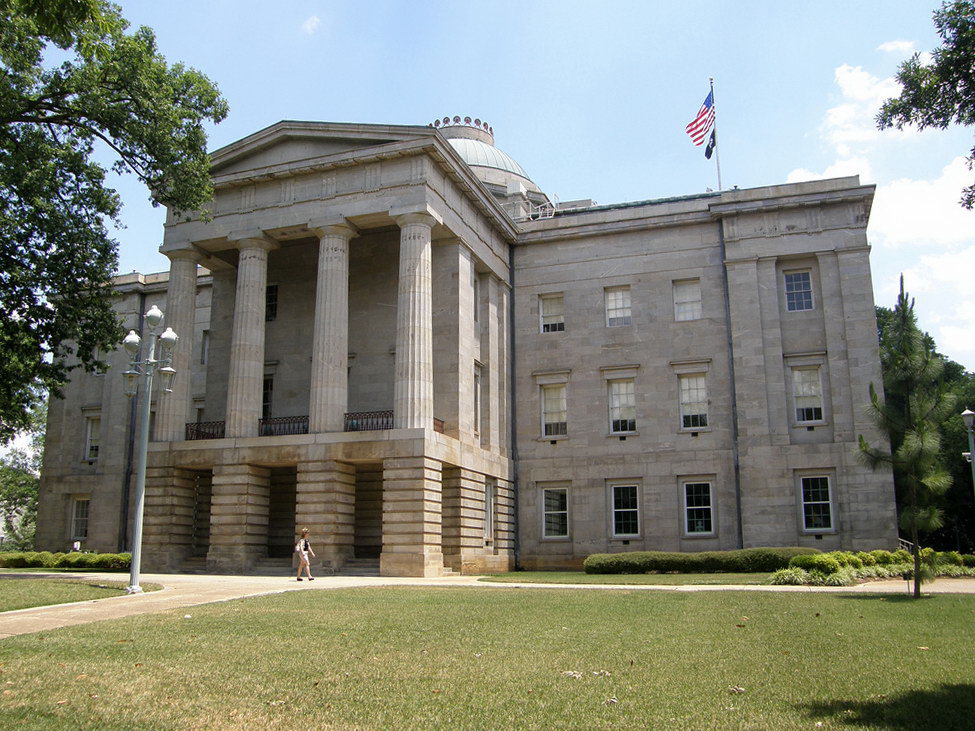
Credit: Wikimedia Commons. Creative Commons Attribution 2.0 Generic Jim Bowen
The Winter 2026 issue of Magnolia features a tribute to Past-President Catherine Howett, FASLA, whose death in November 2025 marked a sad moment for Society members, along with a legion of other friends and professional colleagues. Referenced among her many contributions to our SGHS mission was editing the first issue of Magnolia Essays which featured a paper by Catherine’s University of Georgia student and former SGHS board member, Lucy Lawliss, entitled “Residential Work of the Olmsted Firm in Georgia, 1893-1937.”
The Lawliss essay reminds us again of the impact Frederick Law Olmsted (FLO), along with Frederick Law Olmsted, Jr. and nephew John Charles Olmsted, has had on the Southern landscape. In examining the sweep of domestic landscape design activity in Georgia from the end of the nineteenth century and into the 1930s, Lawliss observes that even landscape designers not directly connected to the Olmsted practice were nonetheless so familiar with the firm’s projects that an Olmstedian design ethos flowed into their work as well.
Gardens posts have discussed several Olmsted-connected undertakings, a great standout being FLO’s work at Biltmore in Asheville, North Carolina. As formal training programs in the field did not exist during his earlier years, what then were the experiences that so influenced FLO that he would ultimately be deemed the “father of landscape architecture” in America? While those influences were widespread chronologically and geographically, some might be found in the three Southern journeys Olmsted made between 1852 and 1854 as a newly minted reporter for The New York Daily Times (as it was first known).
This author examined the topic at the September 2003 Restoring Southern Gardens and Landscapes conference. The theme of the conference was “A Genius and his Legacy: Frederick Law Olmsted and the South,” while the talk in question was “The Travels of Frederick Law Olmsted.” That presentation, in turn, underpinned a Fall 2006 Magnolia article entitled “The Travels of Frederick Law Olmsted in the Antebellum South,” material from that piece being cited below.*
Olmsted’s main goal during these trips, and in his reports to the Times, was to observe firsthand how an enslaved labor system actually functioned, particularly in comparison to an economy based on free labor.** Olmsted being Olmsted, however, he frequently added notes about his surroundings of the moment, urban and rural, designed as well as vernacular and natural. Early in his first journey, for example, he spoke of the landscape at Riversdale Plantation in Maryland, noting “the use of wire fence, a nearly invisible method of livestock control that allowed the grounds around the house to meld seamlessly into pastureland.” (Author’s italics.)
In Virginia and North Carolina, among other landscape observations, Olmsted found time to comment on each state’s capitol grounds. While he admired the naturally sloped site of Richmond’s Jeffersonian seat of government, FLO observed that the addition of the “fine native trees and shrubs of Virginia, particularly the holly and evergreen magnolias,” would further improve the property.*** His criticism of Raleigh’s capitol square became strident, despite his admiration of the building itself. Olmsted observed that the site “remains in a rude state of undressed nature, and is used as a hog-pasture,” noting that if only a small percentage of the building’s cost had been devoted to the grounds it would have “added indescribably to the beauty of the edifice.” Anticipating his future directions, Olmsted observed that an “architect should always begin his work upon the ground.” While in Raleigh FLO also took note of the town’s domestic scene, but in a more positive vein. He found Raleigh a “pleasing” spot, commenting on the “streets wide and lined with trees, and many white wooden mansions all having little courtyards of flowers and shrubbery around them.”
After leaving Raleigh, Olmsted travelled to Fayetteville. Experiencing here a pine forest landscape known best for naval stores production, he then cruised down the Cape Fear River on a steamboat laden with barrels of distilled turpentine. Passing quickly through Wilmington, Olmsted journeyed south visiting Charleston and Savannah, while also having a look at the region’s rice growing country. A future Gardens post will examine his experiences there, along with many other FLO landscape observations in what only a few years later would be the Confederate States of America, a nation at war with the traveler’s native Connecticut and the remaining states of the Union.
**********************************************************
*https://southerngardenhistory.org/wp-content/uploads/2015/12/Magnolia_Fall_2006.pdf#page=1
**FLO’s reports to The Times were summed up in several books published in the 1850s and 1860s. These are discussed on page 5 of the Fall 2006 Magnolia article cited immediately above.
*** At a plantation south of Petersburg, FLO also observed that the owner in following current fashion had replaced oaks with “ailanthus trees in parallel rows.” For more on the use of tree-of-heaven at this point in American history, see: https://southerngardenhistory.org/wp-content/uploads/2017/07/Magnolia_WinterSpring2017.pdf#page=1

Leave a Reply